
Tips and Tricks for Posing Your Horse
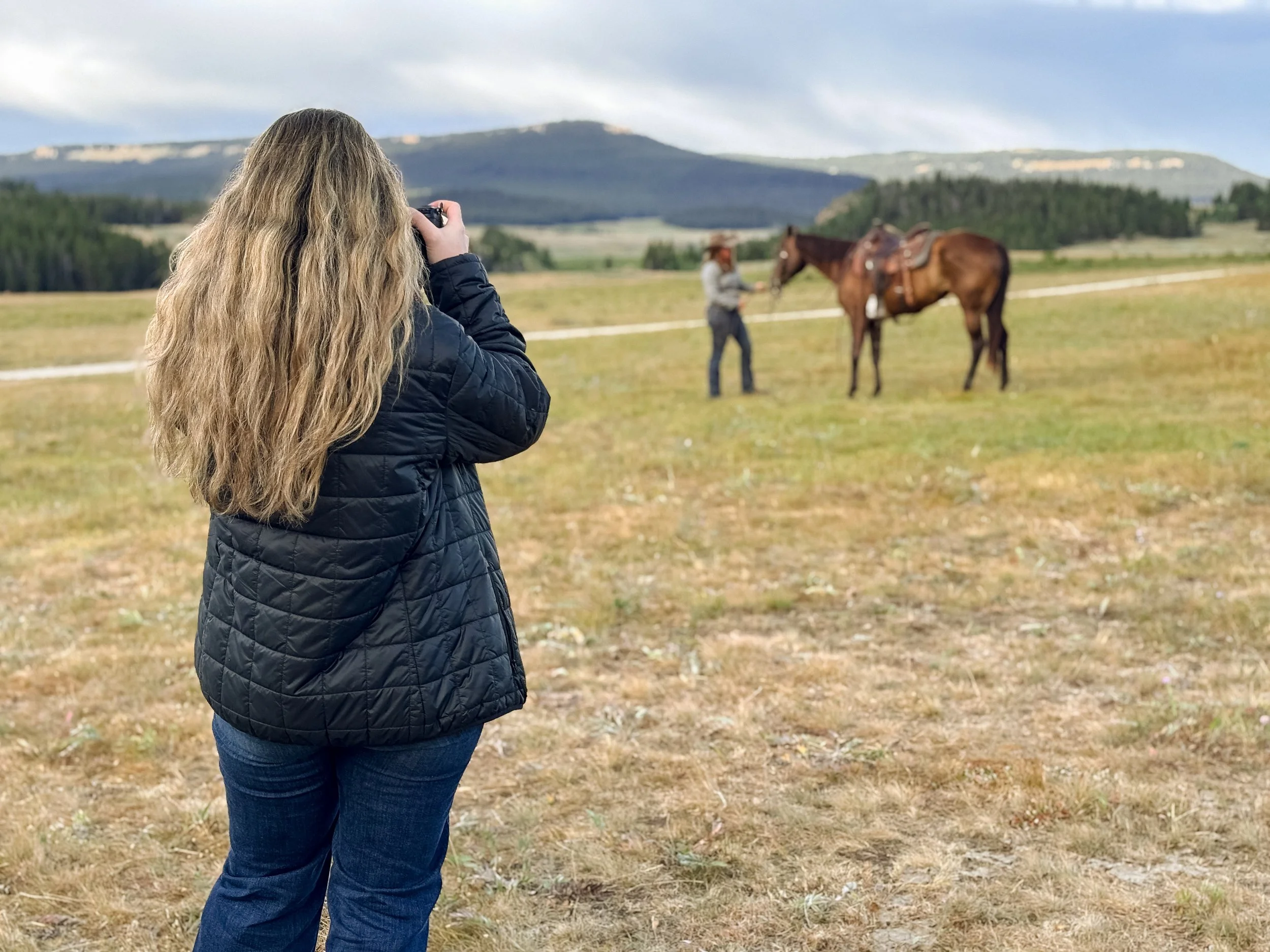
For the photographers stepping into equine sessions—this one’s for you.
Photographing horses is part art, part anatomy lesson, and part absolute patience. They’re beautiful, powerful, and opinionated… and they will humble you if you let them.
Let’s start with angles—because they matter more than you think.
Shooting too low can exaggerate the chest and shorten the neck. Too high flattens their structure and steals the elegance. Aim for a slightly lower-than-eye-level angle, positioned just off the shoulder. This shows off the neck, keeps the body proportional, and creates that strong but graceful silhouette everyone loves.
Pose with purpose, not perfection.
A squared-up horse often looks stiff. Ask for a soft bend in the neck, weight shifted slightly off the front legs, and the head turned just enough to create shape without hiding the eye. Tiny adjustments make massive differences—move yourself before you move the horse again.
Ears up… but not sky-high (the eternal struggle).
We want alert, engaged ears—not giraffe mode. Use sound sparingly and intentionally: a soft whistle, a quiet rustle, or a subtle squeak. Get the ears first, then shoot. If you keep making noise, they’ll throw their head up every time. Timing is everything—wait for that split second when the ears are forward and the head settles naturally.
Watch the neck, always.
If the head lifts too high, the topline breaks and the image loses softness. Ask the handler to lower their hand slightly or step closer to the shoulder. A relaxed horse reads as confident and powerful on camera.
Most importantly—slow it down.
Horses feed off energy. If you rush, they tense. If you breathe, they breathe. Some of the best frames happen in the pause between adjustments.
Equine photography isn’t about forcing a pose—it’s about finding the moment where balance, expression, and trust meet. And when it clicks? There’s nothing better.